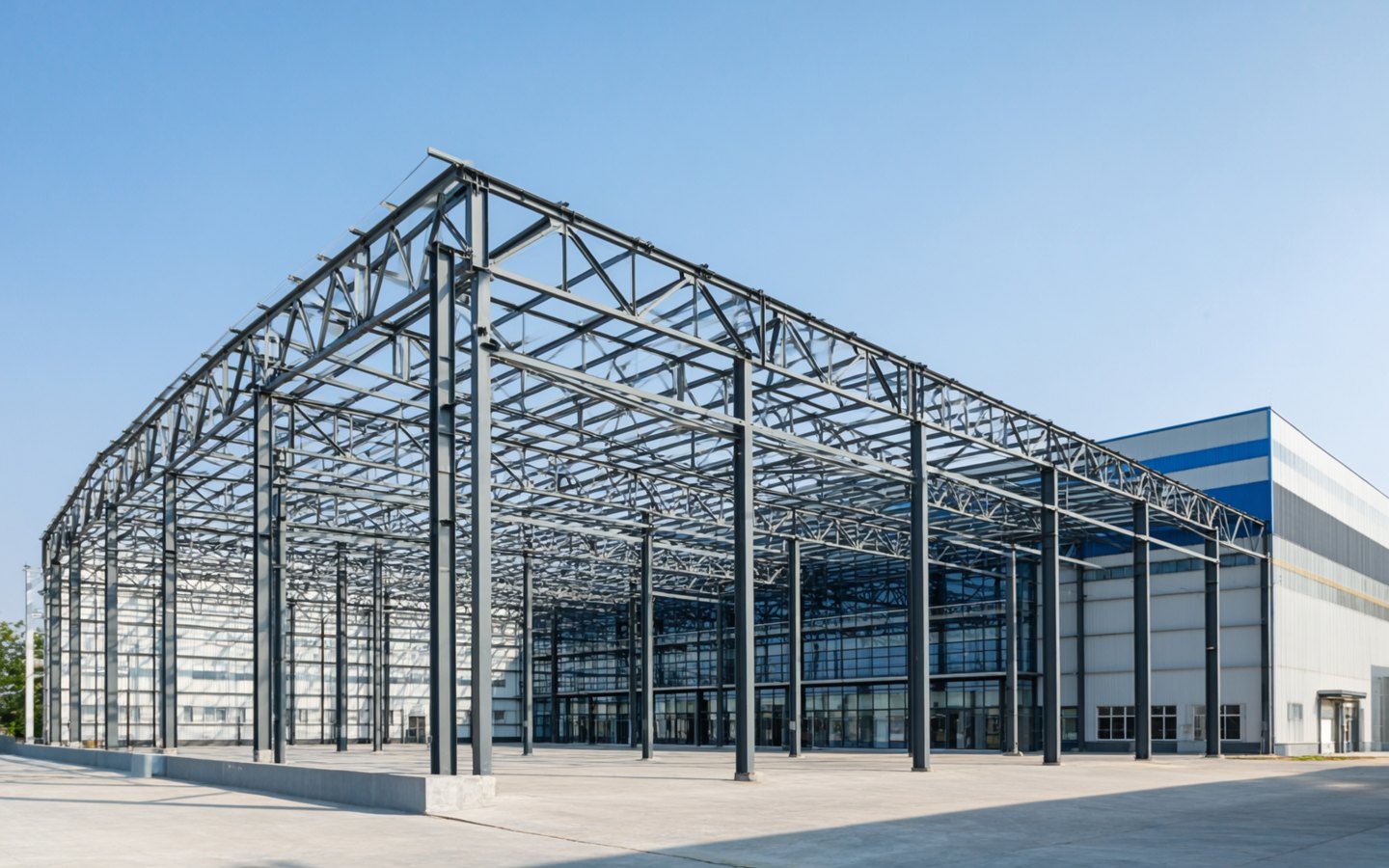
Steel Structure Benefits include speed, strength, long spans, design flexibility, cleaner construction and practical expansion options for commercial and industrial projects.
Explore Shaktirise Infra’s PEB & prefab solutions as part of a practical industrial infrastructure plan. This guide is written for owners, project managers and operations teams that need durable structures, predictable execution and safer long-term use.
1. Faster construction
Steel members can be fabricated off-site while foundation work is in progress. Once delivered, the building frame is assembled with planned connections. This parallel workflow can reduce site delays and help owners move toward operations faster.
2. High strength-to-weight ratio
Structural steel buildings deliver significant strength without excessive dead weight. This helps create efficient frames, longer spans and lighter foundations in many applications, depending on soil and design conditions.
3. Wide clear spans
Factories, warehouses, sports facilities and showrooms often need open interior space. Steel construction can create large column-free areas that support racking, assembly lines, vehicle movement and flexible layouts.
4. Design flexibility
Steel can be engineered for different roof forms, heights, mezzanines, crane systems, canopies, cladding profiles and future extensions. This flexibility is useful for businesses whose facility needs may change over time.
5. Predictable fabrication quality
Factory-controlled fabrication improves dimensional accuracy, welding control, drilling precision and finish consistency. Better fabrication reduces erection issues and improves long-term performance.
6. Expansion and modification
Steel buildings can often be extended by adding bays, modifying wall panels, integrating mezzanines or adapting openings. Planning expansion during the first design phase makes this advantage stronger.
7. Cleaner and more organized sites
Because many parts are prefabricated, site work can be more organized than fully cast-in-place systems. This helps with safety, material control and faster installation sequencing.
8. Durability with correct protection
Steel structures perform well when protected with suitable paint systems, corrosion control, drainage detailing and maintenance. The right coating and inspection plan are essential for coastal, chemical or high-moisture environments.
9. Compatibility with building systems
Steel frames integrate well with roofing, wall cladding, insulation, skylights, ventilators, solar-ready roofs, fire stairs, signage and warehouse docks. This makes steel useful for complete industrial infrastructure packages.
10. Lifecycle value
The best Steel Structure Benefits appear over the life of the building: lower downtime during construction, flexible operations, maintainable components and easier future changes. Owners should evaluate lifecycle value, not only the first quote.
Steel construction planning checklist
- Confirm span, height, design loads, coating system and expansion plan.
- Coordinate structural steel with roofing, cladding, drainage, access and fire systems.
- Evaluate lifecycle value along with upfront cost.
Frequently asked questions
Are steel structures suitable for commercial buildings? Yes. Structural steel buildings are widely used for showrooms, warehouses, industrial parks, commercial sheds and mixed-use facilities.
Do steel buildings need maintenance? Yes. Maintenance includes checking coatings, fasteners, drainage, cladding, corrosion-prone areas and any impact damage from operations.
Planning an industrial infrastructure project?
Share your site requirement, project type and project goals with Shaktirise Infra Projects.